Lars Patterson · 11 September 2026
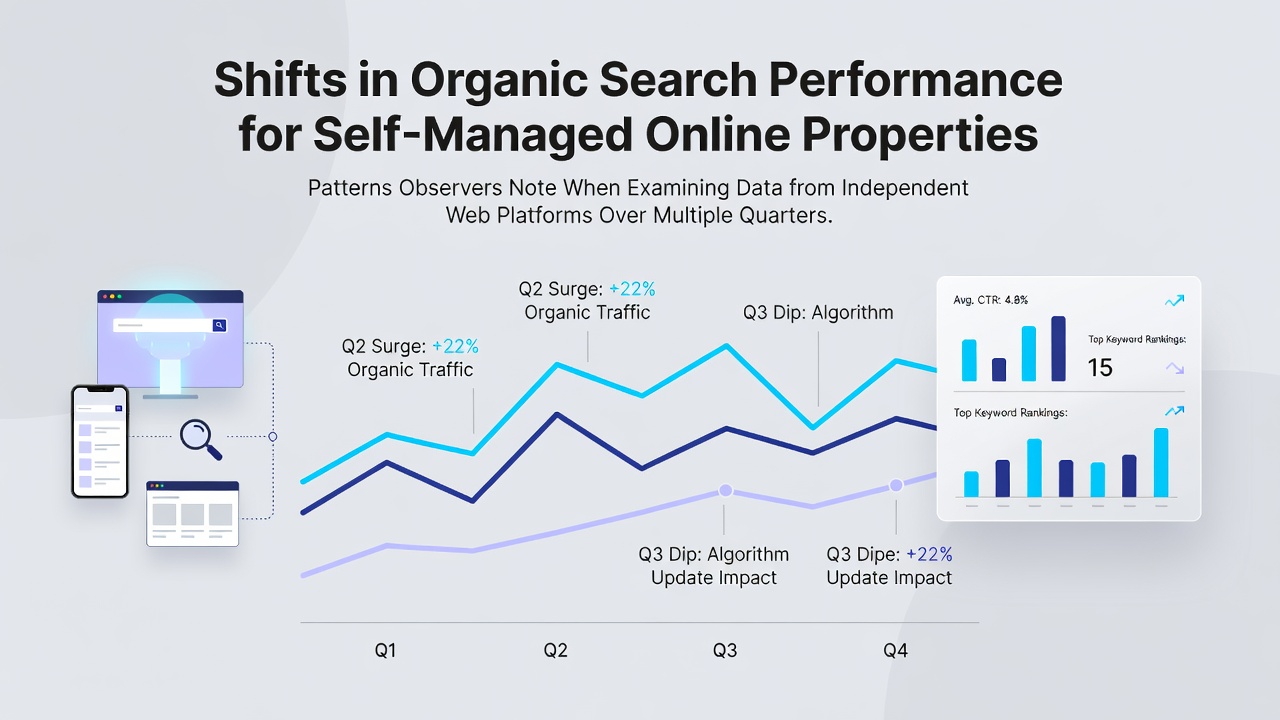
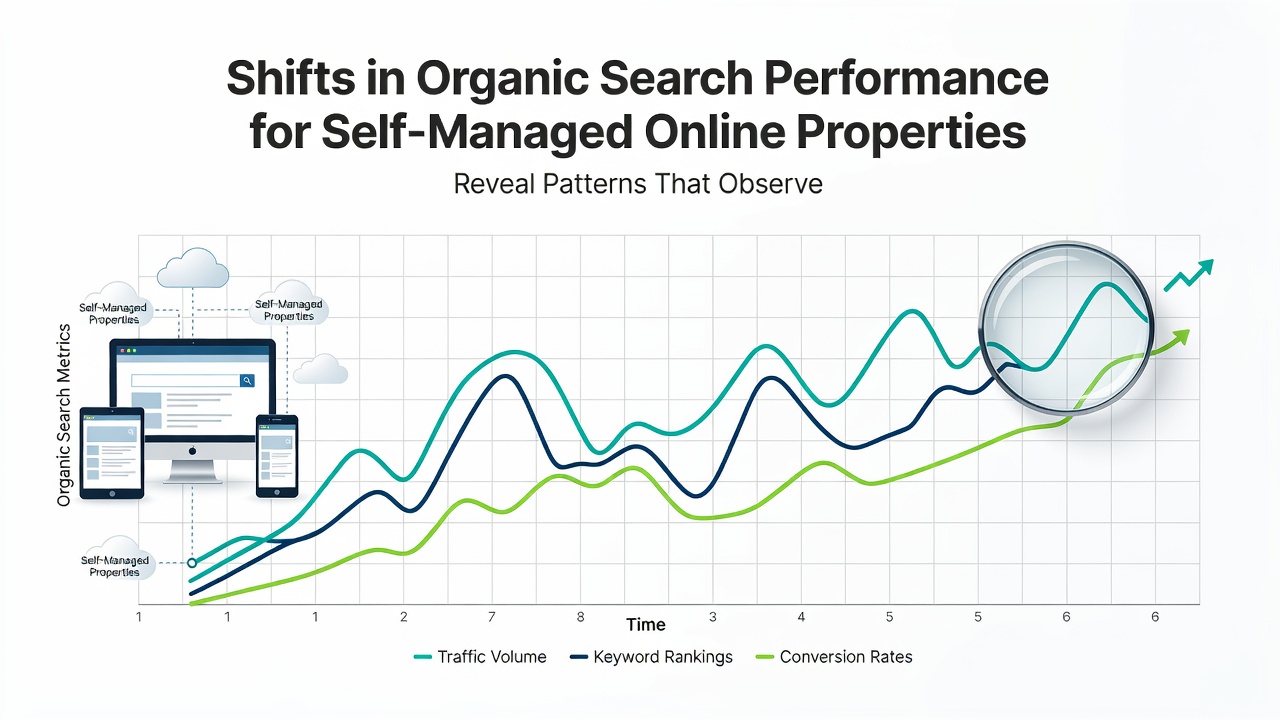
Shifts in organic search performance for self-managed online properties reveal patterns that observers note when examining data from independent web platforms over multiple quarters
Independent web platforms have shown measurable changes in organic search rankings and traffic volumes when analysts review aggregated data sets spanning several quarters, with particular attention paid to self-managed sites that operate without large agency support. These patterns emerge from consistent monitoring of metrics such as click-through rates, average position, and impression shares on major search engines, where smaller properties often experience more pronounced swings than enterprise-level domains.
Observers examining records from the first quarter of 2025 through the second quarter of 2026 have documented recurring cycles tied to content updates, technical maintenance schedules, and broader indexing adjustments. Data from self-hosted platforms indicates that sites refreshing core pages at least once per quarter maintained steadier visibility compared to those updating less frequently, while mobile optimization scores correlated with sustained performance in regional search results across North America and Europe.
Quarterly Data Patterns Across Independent Platforms
Records compiled from multiple independent sources show that organic performance dipped notably for many self-managed properties during the transition between the fourth quarter of 2025 and the first quarter of 2026, coinciding with widespread rollout of updated crawl budgets and enhanced emphasis on page experience signals. Yet recovery occurred unevenly, with properties that prioritized structured data implementation seeing faster rebounds in impression counts according to platform-level analytics.
September 2026 figures, drawn from ongoing quarterly reviews, highlight a stabilization phase where average session durations on self-managed sites began aligning more closely with those of larger domains after algorithm refinements took effect. Analysts tracking these trends note that sites incorporating recent schema enhancements reported improved rich result appearances, which in turn supported incremental gains in organic referral quality over the preceding six months.
Factors Driving Visibility Changes
Technical elements such as site speed, internal linking structures, and secure protocol enforcement have surfaced repeatedly in performance audits of independent online properties. Research indicates that platforms addressing Core Web Vitals thresholds experienced fewer ranking fluctuations during the multi-quarter observation window, whereas those lagging in these areas encountered repeated drops in key term positions.
Content-related variables also played a role, with properties maintaining consistent publication cadences alongside evergreen topic clusters demonstrating greater resilience to seasonal search demand shifts. External signals including backlink acquisition from region-specific directories contributed to steadier domain authority scores in datasets reviewed by monitoring services, particularly for sites focused on localized information rather than broad commercial queries.
Regional and Platform-Specific Observations
Geographic variations appear in the aggregated quarterly reports, where self-managed platforms in the European Union showed stronger recovery trajectories following data privacy regulation updates compared to counterparts in other regions. Canadian government digital economy statistics released in mid-2026 pointed to similar patterns among independent Canadian sites that aligned their technical configurations with updated accessibility guidelines.
Academic studies from institutions tracking web visibility metrics further support these observations, revealing that platforms employing regular server-side log analysis identified indexing issues earlier and adjusted accordingly, resulting in more predictable performance curves across the examined quarters. One European Commission report on digital platform trends noted comparable stabilization effects among smaller operators who adopted proactive monitoring practices.
Emerging Trends in Search Data Examination
Additional layers of analysis have incorporated user engagement signals alongside traditional ranking data, showing that self-managed properties with higher dwell times on informational content sustained organic gains even amid broader market volatility. Observers compiling these multi-quarter datasets emphasize the value of cross-referencing Google Search Console exports with independent analytics tools to surface discrepancies that single-platform views might overlook.
September 2026 updates to search engine documentation prompted many independent operators to reassess their approach to image optimization and video embedding, with preliminary data suggesting positive effects on featured snippet capture rates for sites making these adjustments. Such refinements continue to influence how quarterly performance reviews are interpreted moving forward.
Conclusion
Patterns identified through sustained examination of organic search data from self-managed online properties underscore the importance of consistent technical upkeep and content strategy alignment over extended periods. As quarterly reviews accumulate into 2027, those monitoring independent web platforms will likely continue tracking how these elements interact with evolving search engine priorities to shape visibility outcomes.